
No. 82: Use bus route planning software (properly)
No. 82: Use bus route planning software (properly)
Number 82
Bus route planning software can help optimize journeys for school transport systems, leading to significant environmental and financial benefits. This includes reducing emissions, saving fuel costs, and improving efficiency.
Learn why you should do this:
School transportation is an essential service that benefits millions of students across the world. However, it also has a significant impact on the environment and budget of schools. Therefore, schools are looking for ways to optimize their transportation system to minimize the environmental impact and reduce costs. One such solution is using bus route planning software, which offers numerous benefits.
The first and most obvious benefit of bus route planning software is its ability to optimize routes, reducing fuel consumption and carbon emissions. This is especially critical in schools where multiple buses make numerous trips daily, resulting in a significant amount of fuel consumption and emissions. The software analyzes the optimal routes based on various factors, such as the distance, student capacity, and traffic patterns. This leads to efficient routing, reducing the carbon footprint of the school.
Another benefit of bus route planning software is cost reduction. By optimizing routes, schools can reduce the number of buses required and the total distance traveled, thus saving on fuel and maintenance costs. For example, according to the American School Bus Council, a school bus that transports 54 students is equivalent to removing 36 cars from the road, saving up to $11,000 per year in fuel costs.
Furthermore, the software provides real-time data that helps schools to manage their transportation system better. The data collected by the software can be used to track the location of each bus, the number of students on each bus, and the estimated time of arrival, among others. This information allows schools to quickly address any problems that arise, such as traffic congestion or accidents.
Bus route planning software also improves safety on school buses. By optimizing the routes, the software reduces the number of stops, minimizing the time students spend on the bus, and reducing the risk of accidents. The software can also be used to monitor the speed of the bus, ensuring that drivers adhere to the speed limit, thus improving safety on the road.
According to the National Renewable Energy Laboratory, school districts can save up to 20% of their transportation budgets by optimizing bus routes. By reducing fuel consumption and maintenance costs, schools can channel the saved money towards improving education resources for students, such as books, computers, and laboratory equipment.
In conclusion, using bus route planning software to optimize journeys for school transport systems offers numerous environmental and financial benefits. The software reduces carbon emissions and fuel consumption, lowers transportation costs, improves safety, and provides real-time data to better manage the transportation system. By adopting this technology, schools can create a more efficient, cost-effective, and sustainable transportation system for students.
Sources:
- American School Bus Council. (2019). Benefits of School Bus Transportation. https://www.americanschoolbuscouncil.org/benefits-of-school-bus-transportation/
- National Renewable Energy Laboratory. (2019). Fuel Efficiency & Emissions of School Buses. https://www.nrel.gov/docs/fy19osti/74193.pdf


All 100 ideas in one, easy to share ebook. Download now and start helping your school be its best version of itself...
Downloaded over 17,000 times!
More ways to make a difference, now!
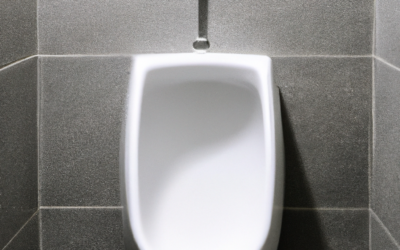
No. 29: Use waterless urinals
Number 27 Waterless urinals in schools can have significant environmental and financial benefits, reducing water usage and associated costs while also lowering carbon emissions from water treatment facilities. Additionally, these urinals can improve indoor air quality...

No. 27: Use automatic window openers to cool and ventilate buildings
Number 27Automatic window openers help to reduce energy costs and improve indoor air quality in schools by providing natural ventilation. This reduces the need for air conditioning systems, lowering energy usage and costs. Additionally, it reduces the environmental...

No. 25: Use shading devices like blinds or awnings to reduce solar heat gain
Number 25Using shading devices like blinds or awnings can reduce solar heat gain in schools, resulting in lower energy costs and reduced carbon emissions. It also provides a more comfortable learning environment for students and staff.Learn why you should do this:...
